
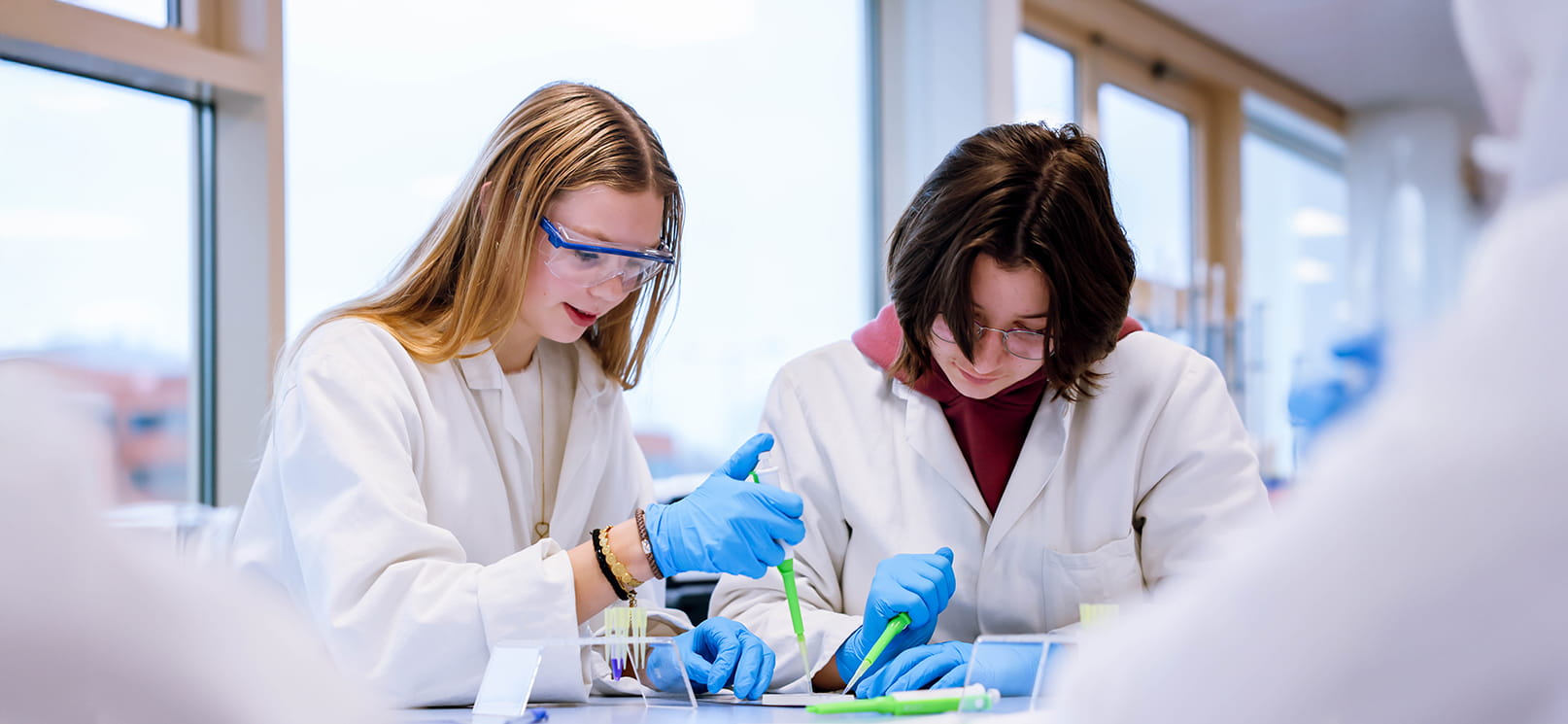
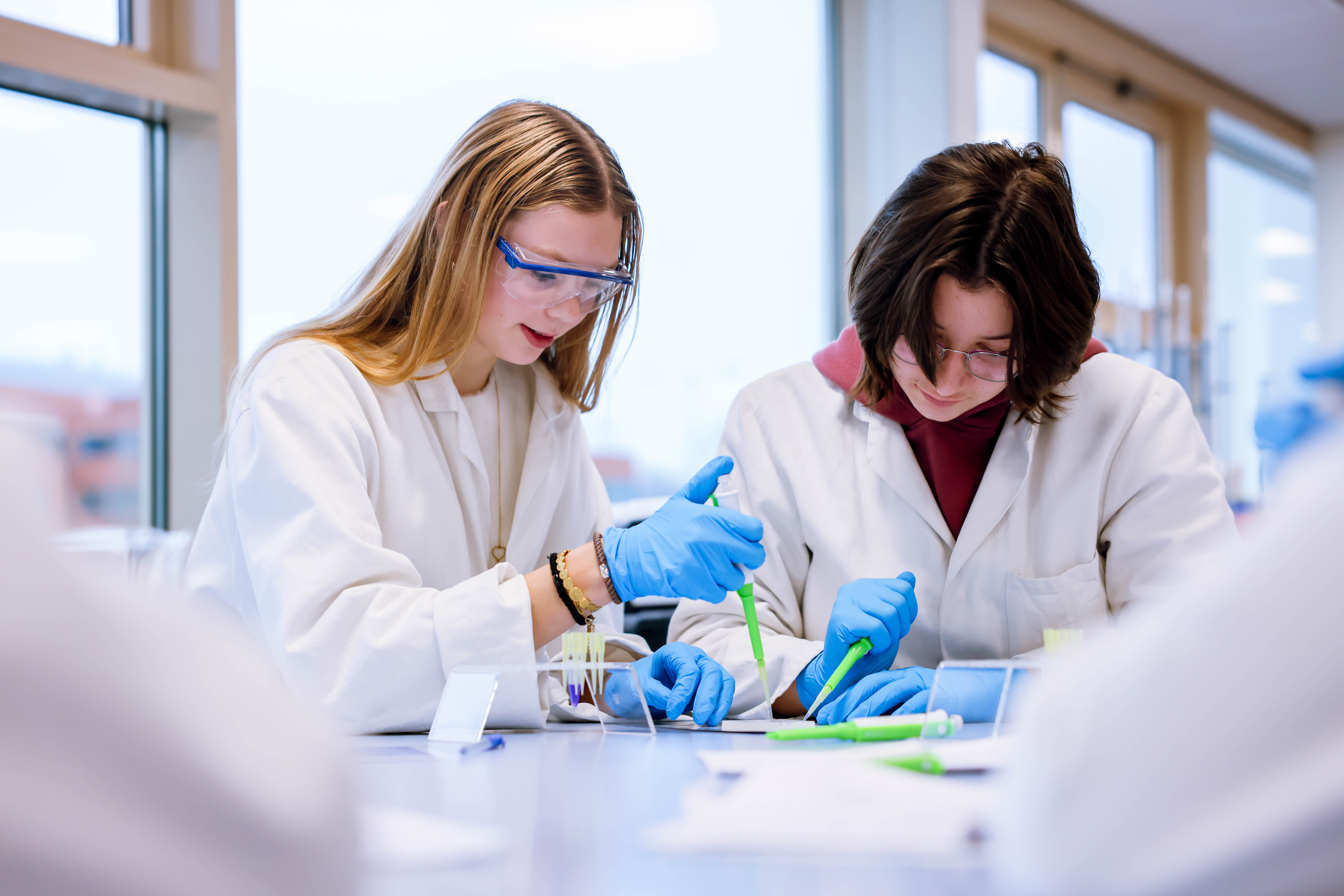
In a science lab at De Passie in Utrecht, vocational secondary school (VMBO), students lean over pipettes, tubes, and gels with full concentration. There is laughter, teamwork, and most importantly action. Today is not about reading from a textbook; it’s about a hands-on introduction to biotechnology. For many students, this is the first time they have worked with DNA.
It’s all part of the Amgen Biotech Experience (ABE) from the Amgen Foundation, delivered in the Netherlands by program partner Reizende DNA-labs. Their goal is to make science accessible by bringing practical lab activities into schools, not only for students who may one day become researchers, but for everyone. Because science is not abstract or remote; it is tangible, relevant, and belongs to all of us.
Learning by doing
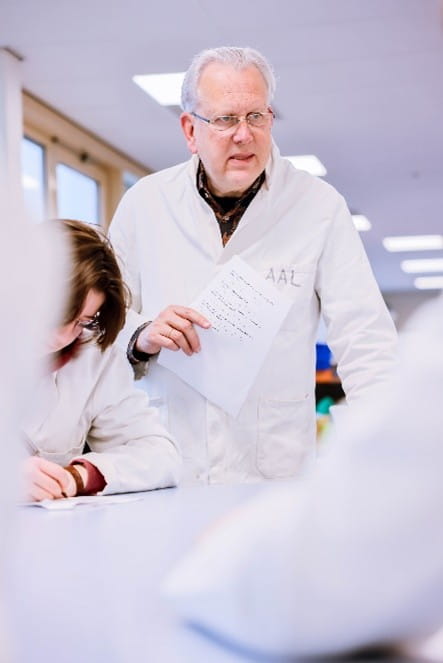
André Aalbersberg - Biology
teacher De Passie
During the practical, students work with the VMBO teaching kit The Harbour Porpoise Case (De Bruinviszaak). Based on a real investigation, they discover how DNA analysis is used to answer questions from real-world scenarios. In this lesson, the central question is what caused the deaths of harbour porpoises that washed ashore with mysterious injuries.
Biology teacher André Aalbersberg sees the impact immediately. “This gives students a living example from real practice,” he explains. “They see what scientific research can deliver and learn to think in a bigger perspective. That makes biology much more concrete than theory alone.”
The lesson also fits the VMBO context well. The structure is familiar and advances step-by-step instructions with a practical component that challenges but doesn’t overwhelm students. “For many students, the distance to the labour market can feel huge,” says Aalbersberg, “but activities like this make it clear how small that distance actually is.”
Science for all parts of society
The Harbour Porpoise Case is based on research by Lonneke IJsseldijk, a biologist at Utrecht University. She investigates stranded marine mammals such as harbour porpoises and seals and DNA plays a key role in her work.
Lonneke IJsseldijk - Biologist
Utrecht University
“DNA was the missing piece of the puzzle,” IJsseldijk explains. “It gave us hard evidence showed what really happened: grey seals were responsible for the fatal injuries to the harbour porpoises.” That is precisely why she believes it is important that this kind of research does not remain within the university. “Science should be available to every part of society. We need people at all levels: in the lab, in hands-on roles, and in supporting functions. Everyone can contribute.”
That idea is at the heart of ABE: practical science in the classroom, for every student—regardless of school type, background, or learning pathway.
From idea to classroom kit—together with VMBO
To make that ambition a reality, The Harbour Porpoise Case was developed as a complete VMBO teaching kit and introduced to participating schools in the Netherlands during the academic year. Melanie Rosenhart from Reizende DNA-labs and project lead for ABE The Netherlands, initiated the project, working in close collaboration with VMBO teachers Tess Bierhuizen and Irene Dirkx, who brought their day-to-day classroom experience to the table to shape content, level, and feasibility.
“The involvement of Tess and Irene ensured the kit aligns well with different VMBO pathways and can be integrated into the curriculum,” says Rosenhart. “The kit was then extensively tested with teachers and students, so that theory and practice are truly balanced.”
What is a teaching kit?
A teaching kit is a complete practical lab activity that schools can borrow free of charge. The VMBO kit The Harbour Porpoise Case contains everything needed to run a DNA practical independently: materials, instructions, and lesson support. The kit is shipped by post and designed so that cost or logistics are never a barrier.
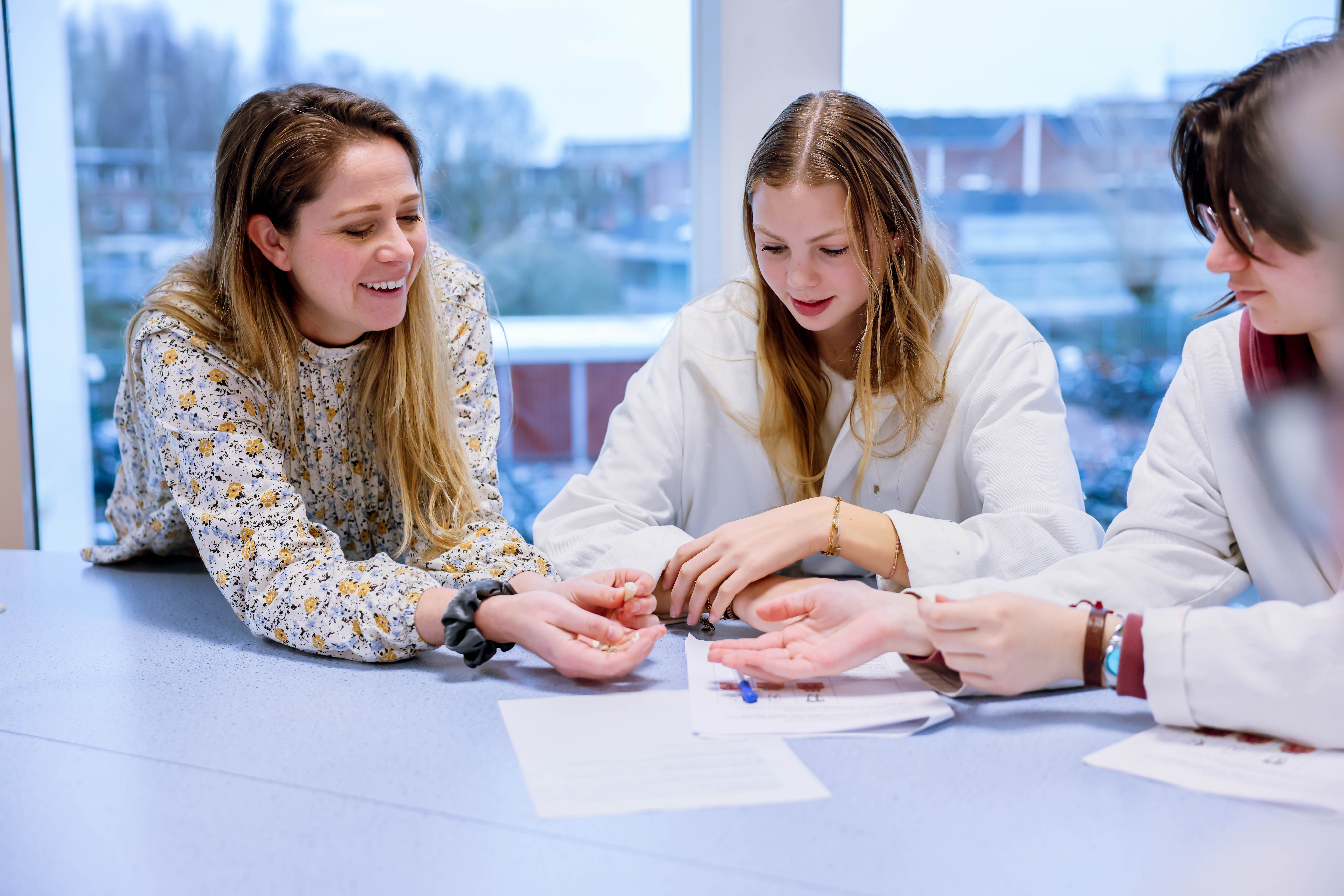
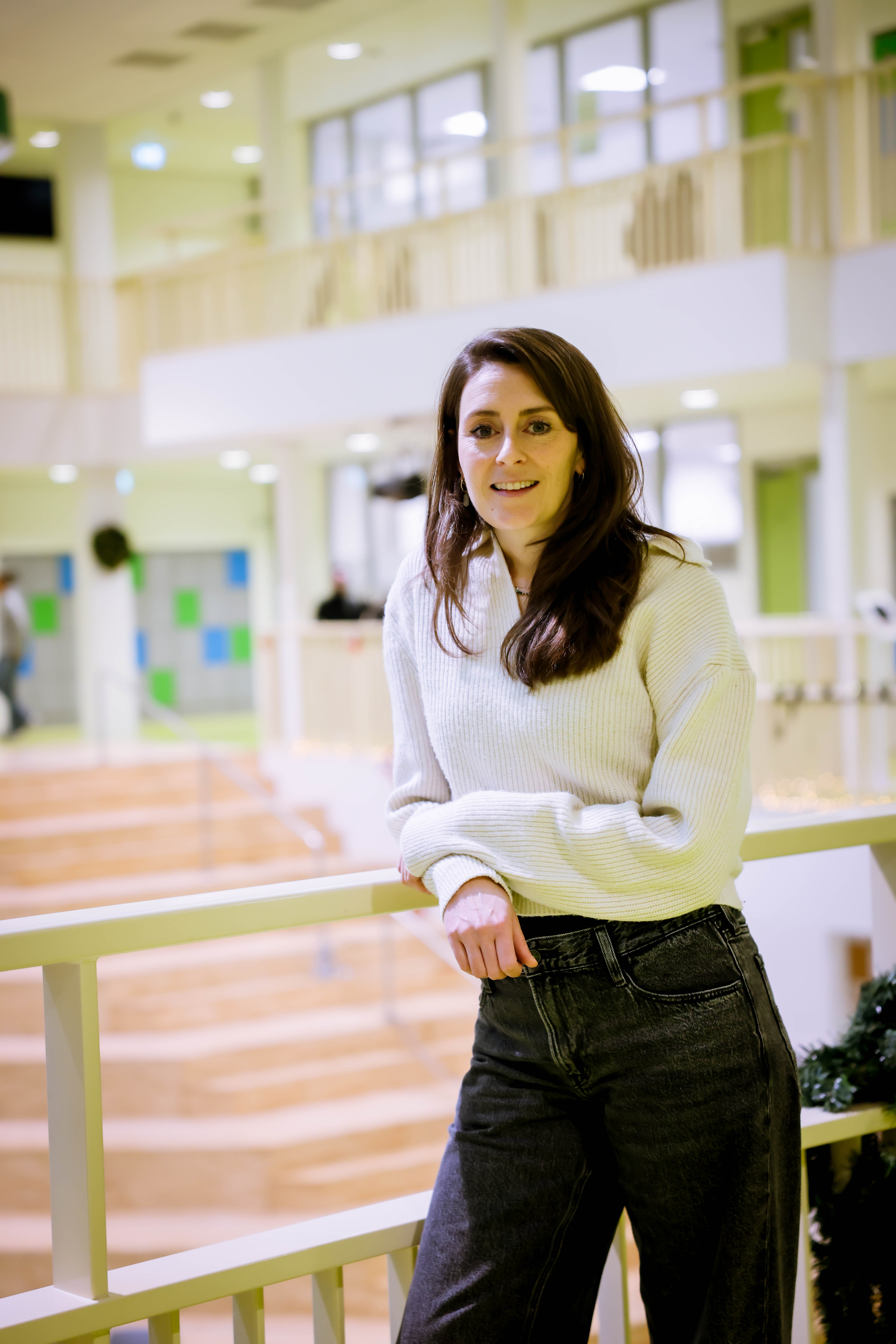
Melanie Rosenhart - Reizende DNA-labs and Project Lead
Amgen Biotech Experience in the Netherlands with students De Passie
“We want schools to be able to participate without barriers,” says Rosenhart. “That’s why the kit is free and fully complete. In this way, we contribute to equal opportunities and inclusive education. The impact is already visible: we expect around 500 VMBO students to work with The Harbour Porpoise Case this academic year.”
The kit supports the broader reach of the ABE and Reizende DNA-labs programs, which together engage around 10,000 students in the Netherlands each year. Students from different educational levels and backgrounds get the chance to experience biotechnology firsthand—right in their own classrooms. It’s all part of a global program from the Amgen Foundation that has already reached over one million students, with ABE operational in 17 countries across the world.
The student experience
For students, it’s all about doing. As student Narina puts it, “I really enjoyed working with the pipette. I liked the practical part.”
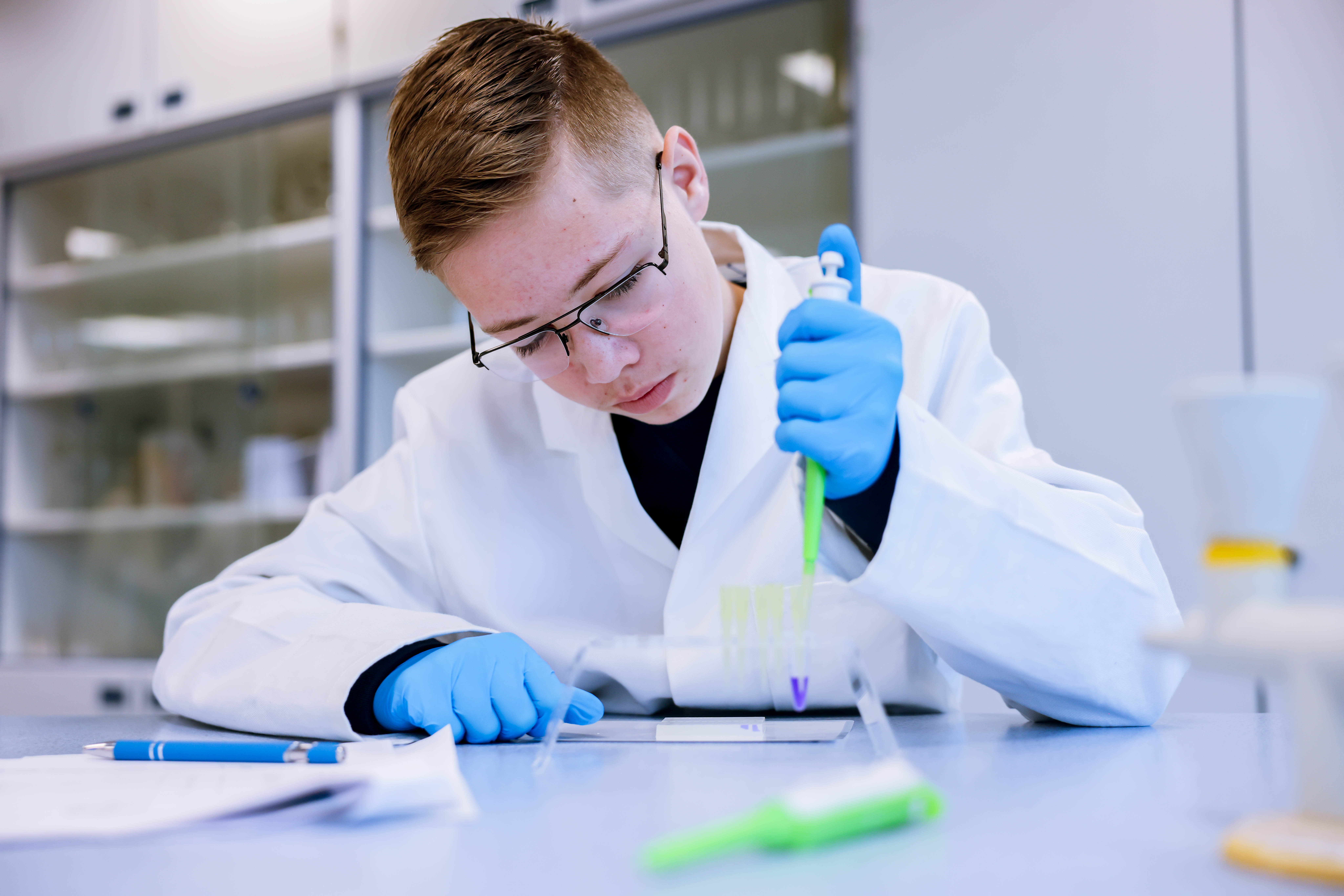
Student De Passie
That experience—investigating, discovering, learning with your own hands—makes science real. It shows students that biotechnology is not something abstract but, rather, something they can be part of themselves.
From the classroom to Europe
This approach is also being recognised beyond the Netherlands. The VMBO kit The Harbour Porpoise Case has been selected for presentation at the Science on Stage Festival 2026 in Lithuania. At this international conference, teachers and education initiatives from across Europe share inspiring examples of innovative science education.
A wonderful acknowledgment of what has been built together with schools, teachers, and scientists—and extra motivation to keep making science accessible for every student.
Read more on: